 EN

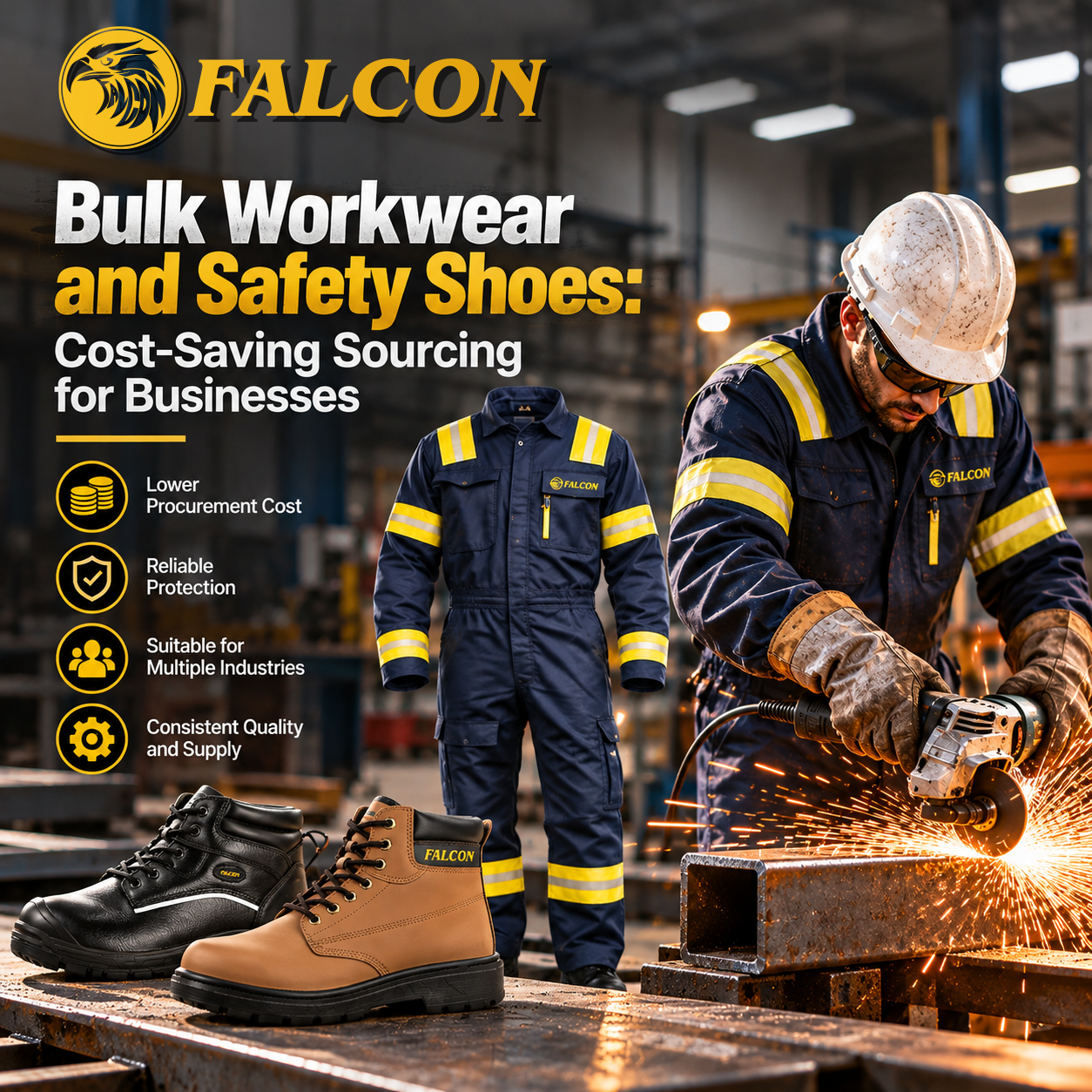
Outfitting an entire workforce is expensive, which is why most businesses buy workwear and safety shoes in bulk. Bulk purchasing lowers the per-unit cost of PPE, simplifies ordering and stock control, and keeps every employee in the same standard of gear. This guide covers what to look for when sourcing workwear and safety shoes in bulk, and how to build a supply plan that holds up over time.
Why Bulk Sourcing Makes Sense for Businesses
Buying PPE piecemeal usually means paying more per unit and placing the same small orders again and again. Bulk sourcing removes much of that friction:
· Lower cost per unit. Volume discounts on purchases and production help businesses stabilise operational budgets and reduce unit procurement costs.
· Consistent quality and appearance. A single bulk order ensures all workers receive garments and footwear made from the same material and produced to identical specifications.
· Simplified inventory management. With one order, one delivery and one set of records, stock control is far less complicated than managing frequent small orders.
· Reliable supply. A long-term supply partner can forecast your future demand and reduce the risk of stockouts.
For businesses with a stable workforce, bulk sourcing is more than a purchasing choice — it is an integral part of safety and operational management.
Choosing the Right Workwear for Your Team
Workwear should match your working environment and the tasks employees perform. Key factors to consider include:
· Fabric material. Common workwear fabrics include cotton, polyester, and cotton-polyester blends. Cotton is soft and breathable, offering good comfort in warm working conditions. Polyester fabric is durable, quick-drying and resistant to shrinkage. Cotton-polyester blends are widely popular, combining the breathability and comfort of cotton with the strength and durability of polyester.
· Durability and reinforcement. Workwear must withstand repeated washing, abrasion and daily workplace wear. Reinforced stitching at stress points extends garment service life.
· Suitability for tasks and weather. Insulated jackets and coats may be required for outdoor or cold environments. Lightweight shirts and trousers are better suited for warm indoor workspaces. Certain roles require additional performance features, such as high visibility or flame-resistant treatment.
· Fit and sizing. Avoid workwear that restricts movement or is overly loose, as loose fabric can catch on machinery. Offer a comprehensive size range to accommodate all team members.
Selecting suitable safety shoes is equally critical, as they form an essential part of personal protective equipment. Safety footwear protects feet against impact, compression, puncture risks and slips. Below are key points for wholesale safety shoe selection:
· Toe protection. Safety shoes typically feature steel toe caps or composite toe caps. Steel toe caps deliver reliable impact protection but are heavier and thermally conductive. Composite toe caps are lighter and offer thermal insulation while meeting required impact and compression protection standards. Your selection depends on site conditions and worker preference.
· Sole material. Outsoles are commonly made of rubber or polyurethane. Rubber soles provide strong anti-slip grip. Polyurethane soles are lightweight, flexible, oil-resistant and abrasion-resistant. The correct outsole choice depends on floor conditions and exposure to oils or chemicals.
· Upper material. Uppers can be constructed from leather, mesh or synthetic mesh. Leather offers solid protection and durability, while mesh variants deliver breathability and light weight. Many safety shoes combine leather with breathable textured panels to balance safety and comfort.
· Comfort. Comfort is vital for workers who wear safety shoes throughout long shifts. Quality cushioning, breathable linings and proper arch support reduce fatigue and improve wearer acceptance.
· Size range and fit. Provide a full size range, including wide fittings where needed. Poorly fitted safety shoes are uncomfortable and compromise protective performance.
Build a Cost-Effective Supply Plan
The benefits of bulk sourcing come from integrating bulk orders into a structured supply strategy. Keep these points in mind:
· Assess your requirements. Confirm the quantity and size matrix for workwear and safety shoes, plus expected replacement cycles. Standardise specifications across departments wherever possible to simplify ordering and stockholding.
· Plan for scheduled replacement. Workwear and safety shoes degrade over time with use. Implement routine replacement schedules to avoid emergency shortages.
· Partner with a reliable supplier. A trusted long-term supplier can maintain consistent quality, stable lead times and ongoing support for repeat orders.
· Consolidate orders. Combine workwear, safety shoes and other protective equipment into the same order where feasible to streamline logistics and administrative work.
Conclusion
Bulk procurement of workwear and safety footwear enables businesses to secure consistent product quality and reliable foot and body protection for employees. Careful selection of fabrics, toe protection, outsole compounds and correct sizing keeps workers safe and comfortable. With a scheduled ordering process and a dependable supplier, bulk sourcing becomes a practical, efficient solution for your operation.
FALCON is a professional integrated industrial brand that provides high-quality abrasive tools and safety protection products such as workwear, safety shoes, safety vests, hard hats, safety glasses, work gloves and ear plugs.