 EN

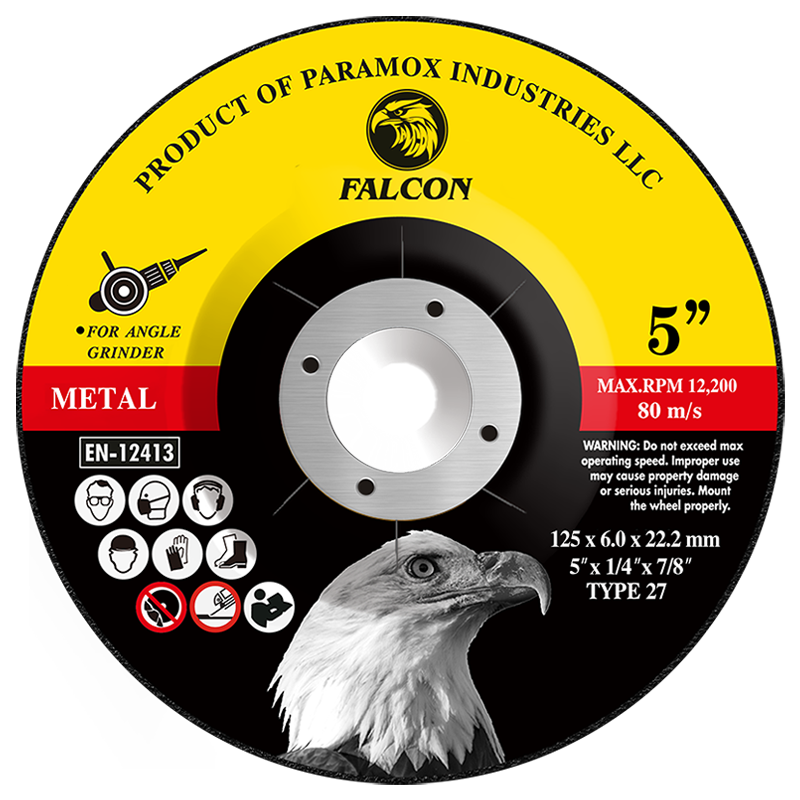
A Abrasive wheels are essential tools in metal fabrication, construction, welding, maintenance and general industrial work. When selecting an abrasive wheel, users often focus on diameter, thickness, abrasive material and RPM. However, the wheel type and profile are also important because they affect how the wheel is mounted and how it can be used.
Two common wheel configurations are Type 1 and Type 27.
Type 1 features a flat profile, while Type 27 has a depressed-center design. Although these two wheel types may be used in similar metalworking environments, their structures and typical applications are different.
Type 1 is commonly associated with straight cutting applications, while Type 27 is widely used for grinding and surface-preparation work when the specific wheel is designed and marked for these operations.
What Is a Type 1 Wheel?
A Type 1 wheel is a flat-profile abrasive wheel with a straight, uniform structure across the wheel. It is commonly used for cutting applications where the outer edge of the wheel performs the cutting action.
The relatively thin profile of a Type 1 cut-off wheel creates a narrow cutting path, helping users make fast and controlled cuts while minimizing unnecessary material removal.
Typical applications include:
· Cutting steel pipes and tubes
· Cutting metal bars and profiles
· Cutting sheet metal
· Cutting rebar
· Cutting stainless steel
· General metal fabrication
· Other straight-cutting applications specified by the manufacturer
Type 1 wheels are commonly selected when the primary task is to cut material to size. Their flat profile provides a straightforward cutting configuration for applications where a narrow and controlled kerf is required.
However, a Type 1 wheel should not be used for side grinding simply because it can be mounted on an angle grinder. The permitted operation depends on the wheel design and product markings. Users should always follow the manufacturer's instructions, maximum RPM and machine requirements.
What Is a Type 27 Wheel?
A Type 27 wheel is a depressed-center abrasive wheel. Its most recognizable feature is the recessed center section, which places the mounting area below the working surface of the wheel.
This design creates additional clearance around the hub and mounting flange. As a result, Type 27 wheels are particularly common on portable angle grinders and other grinding equipment.
Type 27 wheels are widely used for applications such as:
· Grinding
· Deburring
· Weld cleaning
· Edge treatment
· Surface preparation
· Removing excess material
· Rust and scale removal
· Certain cutting or flush-cutting applications when specifically designed and marked for them
The important point is that Type 27 describes the wheel configuration, not every operation the wheel can perform.
A Type 27 grinding wheel should not automatically be used as a cutting wheel, and a Type 27 cutting wheel should not automatically be used for grinding. The intended application must be confirmed from the product marking and manufacturer's instructions.
The depressed-center design is what gives Type 27 wheels their practical advantage in many grinding applications. It provides greater clearance between the mounting hardware and the working area, allowing the abrasive surface to reach the workpiece more effectively in applications for which the wheel is designed.
Type 1 vs. Type 27: What Is the Difference?
Structurally speaking, Type 1 features a flat straight profile with no hub recess, built exclusively for cut-off and through-cut work. It is relatively thin and optimized for slicing through material quickly. Type 1 wheels are meant to operate in straight-cut orientations only and tolerate light-to-moderate cutting loads. Applying side pressure for grinding is improper and dangerous, which may trigger wheel damage.
In contrast, Type 27 adopts a special depressed-center recessed-hub design. It is made with a much thicker abrasive layer to handle heavy-duty material removal. The wheel supports angled contact against workpieces and performs well under high working pressure for grinding, deburring and weld cleaning. Though robust for surface processing, Type 27 is not designed for deep through cutting tasks.
Mounting requirements also separate the two styles. The depressed hub of Type 27 needs well-matched grinder flanges for secure installation. Regardless of wheel type, operators must strictly follow the maximum RPM rating marked on your power tool to guarantee operational safety.
Why Does Type 27 Have a Depressed Center?
Type 27 gains its flexibility directly from its depressed-center construction. The recessed hub keeps the metal flange clear from touching the workpiece surface, so operators can hold the grinder at various working angles from shallow finishing to aggressive grinding.
One single Type 27 wheel can complete multiple sequential jobs: remove weld beads, deburr sharp cut edges left by Type 1 wheels, grind down excess material, smooth rust and scale, and blend uneven surfaces. Users do not need to swap wheels frequently between different surface-treatment steps.
For on-site jobs where tool-change time matters, this multi-task capability improves overall workflow efficiency. While Type 1 only executes one job (cutting), Type 27 covers most post-cutting surface-prep workflows, explaining its broad adoption across many trades.
Type 1 vs. Type 27: Which Applications Are They Suitable For?
Suitable Applications for Type 1
· Straight through-cutting of metal pipes, tubes and sheet metal
· Cutting rebar, steel bars and structural profiles
· Slicing stone, concrete and masonry materials
· Scenarios requiring narrow, clean kerf with minimal material loss
Suitable Applications for Type 27
· Weld cleaning and weld-bead removal after welding work
· Deburring sharp edges generated by Type 1 cutting
· Heavy stock removal on steel surfaces
· Grinding away rust, scale, paint and surface defects
· Edge chamfering, surface blending and finishing for metal parts
· General-purpose on-site metal correction for fabrication and construction
In many real-world workflows, these two wheels work as a set: Type 1 cuts the part to size, and Type 27 handles all subsequent surface preparation work.
Why Type 27 Can Be a Practical Choice for Professional Users
For professional users, abrasive-wheel selection is not only about cutting or grinding performance. Productivity, consistency and ease of use are also important.
Type 27 can be particularly practical when a job involves several surface-treatment steps.
For example, a fabrication project may require the operator to remove weld material, smooth edges, eliminate burrs and prepare a metal surface before the next process. A suitable Type 27 grinding wheel can address several of these grinding-related tasks.
For distributors, Type 27 wheels can also form an important part of a broader abrasive product portfolio because grinding, deburring and weld-cleaning applications are common across metal fabrication and maintenance industries.
Type 27 for Stainless Steel and Metal Fabrication
Metal-fabrication workshops, especially those working with stainless steel, place strict demands on grinding-wheel performance. Poor-quality wheels can cause surface discoloration, heat tint, deep scratches or contamination that ruins stainless-steel workpieces.
Purpose-formulated Type 27 wheels for stainless steel feature selected abrasive grains and low-heat resin bonding systems. They minimize heat buildup during grinding, reducing blue heat-tint marks on stainless surfaces. These wheels efficiently remove weld discoloration, smooth cutting burrs and blend seams without over-aggressive scratching.
For carbon-steel fabrication, general-grade aluminum-oxide Type 27 wheels perform heavy-duty weld grinding and stock removal. Whether working on structural steel frames, metal cabinets or metal-assembly components, Type 27 acts as the core finishing consumable throughout the fabrication cycle.
How to Choose Between Type 1 and Type 27?
When selecting an abrasive wheel, consider the following factors:
1. Identify the main operation
If the primary task is straight cutting, a suitable Type 1 cut-off wheel may be the right choice.
If the main task involves grinding, deburring, weld cleaning or surface preparation, consider a Type 27 wheel specifically designed for that application.
2. Check the workpiece material
Different materials require different abrasive formulations.
For example, stainless steel and carbon steel may require different wheel formulations to achieve suitable performance and surface results.
3. Confirm wheel dimensions
Check:
· Wheel diameter
· Wheel thickness
· Bore size
· Maximum operating speed
The wheel must be compatible with the grinder and the intended application.
4. Check the product marking
Never select a wheel based only on its shape.
Always confirm the permitted operation, material compatibility, maximum RPM and other information provided by the manufacturer.
5. Consider the complete workflow
For many professional applications, both Type 1 and Type 27 have a place in the workshop.
Type 1 can handle cutting, while Type 27 can support subsequent grinding and surface-preparation operations.
Why Type 27 Is Worth Considering
Many buyers treat Type 1 as the default abrasive wheel, yet Type 27 brings tangible advantages for both end-users and wholesale partners.
From an end-user perspective, one Type 27 wheel covers multiple grinding-related jobs, simplifying on-site tool kits. Its depressed-center design supports angled grinding that flat-profile Type 1 wheels cannot safely achieve. Premium-grade Type 27 wheels deliver long service life under heavy-load industrial conditions, cutting down downtime from frequent wheel replacement.
For B2B wholesale customers, Type 27 maintains steady, high-volume demand. Investing in reliable Type 27 product lines helps you satisfy fabricators, maintenance teams and construction-trade clients. Even if your customers already purchase Type 1 cut-off wheels, they will continuously restock Type 27 for post-cut surface work. When you compare total-cost-of-use rather than only unit price, high-quality Type 27 delivers strong overall value.
FALCON's Type 27 Solution
At FALCON, we focus on abrasive products for professional metalworking, fabrication and industrial applications.
Our Type 27 grinding wheel range is developed for different metalworking requirements, including general steel grinding and stainless steel fabrication.
Depending on the product specification, FALCON Type 27 wheels can be supplied in different diameters, thicknesses and abrasive formulations to meet different equipment and application requirements.
For professional users and distributors, we provide:
· Type 27 grinding wheels for metalworking
· Stainless steel grinding wheel options
· Different sizes and specifications
· Factory-direct supply
· OEM and private-label support
· Bulk-order solutions for distributors
· Product and application support
FALCON focuses on stable product quality and consistent manufacturing to help distributors and professional users build reliable abrasive-product supply.
If you are looking for a Type 27 grinding wheel supplier for metal fabrication, stainless steel processing or industrial maintenance, FALCON can provide product solutions based on your required specifications and target market.
Table of Contents
- What Is a Type 1 Wheel?
- What Is a Type 27 Wheel?
- Type 1 vs. Type 27: What Is the Difference?
- Why Does Type 27 Have a Depressed Center?
- Type 1 vs. Type 27: Which Applications Are They Suitable For?
- Why Type 27 Can Be a Practical Choice for Professional Users
- Type 27 for Stainless Steel and Metal Fabrication
- How to Choose Between Type 1 and Type 27?
- Why Type 27 Is Worth Considering
- FALCON's Type 27 Solution