 EN

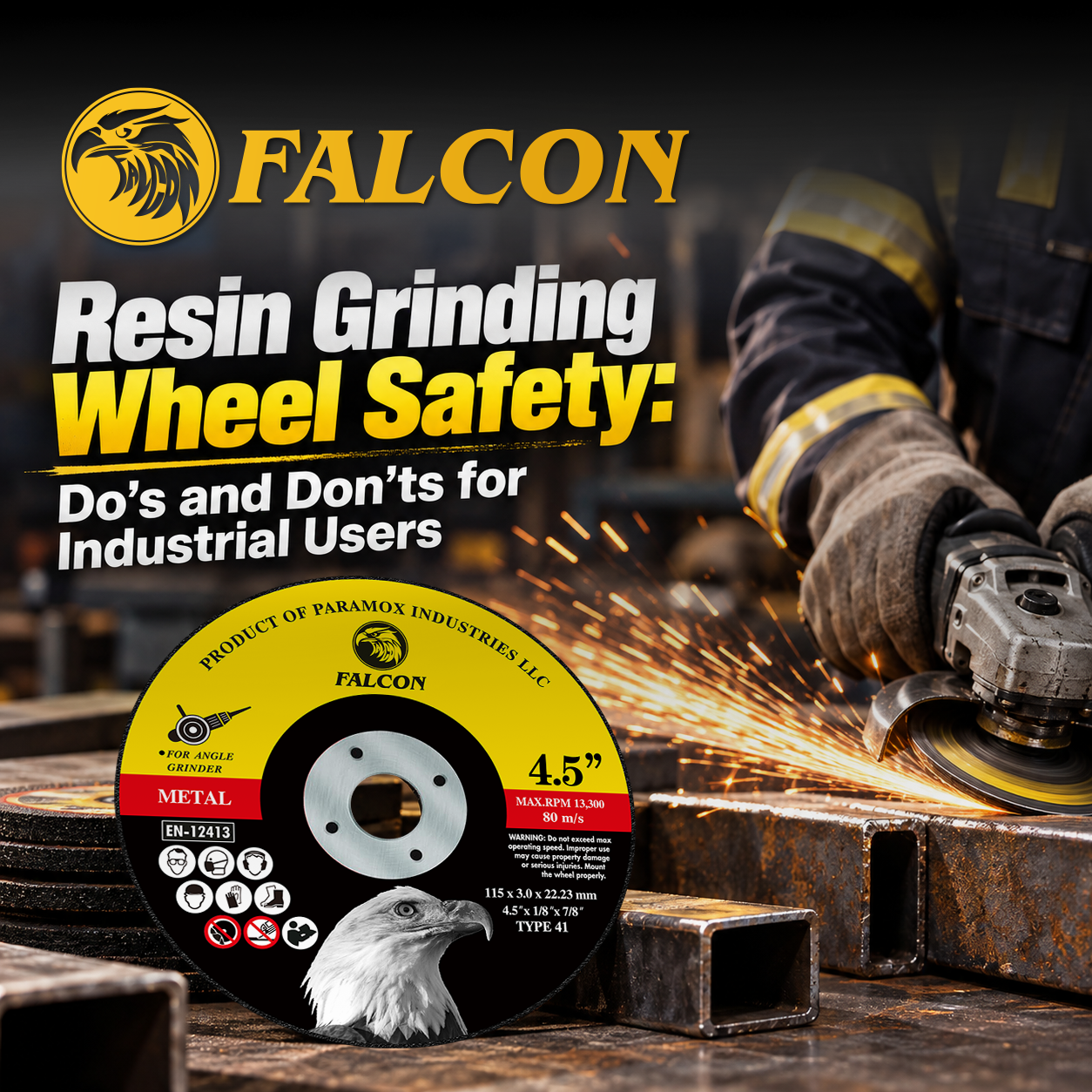
Resin-bonded grinding wheels are among the most widely used abrasive tools for industrial metal fabrication. Featuring fast cutting capability and smooth grinding performance, they can process a wide variety of materials, making them highly valuable for many workshop applications. However, grinding wheels operate at high rotational speeds. Improper handling may cause wheel breakage, flying fragments and serious injury. Most accidents can be avoided with correct storage, inspection, mounting and operation, together with proper operator training. This article covers key do’s and don’ts for industrial users of resin grinding wheels.
Do’s: Correct Safe Grinding Practices
Following proper procedures protects both the operator and nearby personnel.
· Do store grinding wheels correctly. Resin-bonded wheels are sensitive to moisture, extreme temperatures and impact. Keep them in a dry, well-ventilated area away from direct sunlight, intense heat and freezing conditions. Store wheels flat and supported properly; do not stack heavy items on top. Moisture absorption weakens resin wheels and creates safety hazards.
· Do inspect every wheel before mounting. Check for cracks, chips or other damage before installation. A visual inspection combined with a light ring test helps detect hidden defects. If the wheel produces a dull, muffled sound instead of a clear ringing tone, do not use it. Only fit undamaged wheels that match your intended grinding task.
· Do match the wheel to the machine and application. Confirm the wheel’s maximum operating speed is equal to or higher than the machine’s rated spindle speed. Never fit a wheel with a lower rated speed than the machine speed. Select the correct wheel type, grit size and hardness for the workpiece material.
· Do use suitable flanges and follow standard mounting procedures. Use clean, undamaged flanges of the correct size. Tighten the mounting nut securely but avoid over-tightening, as excessive force can crack the wheel. Always follow the manufacturer’s mounting instructions.
· Do wear appropriate PPE. Safety glasses or a face shield, hearing protection and work gloves are required. Depending on the workpiece material, a dust mask or respirator may also be necessary. Secure loose clothing to prevent entanglement.
· Do run the wheel under no load before grinding. After mounting, start the machine and let the wheel run at operating speed without applying any workpiece contact. Do not stand directly in the wheel’s rotational plane during this test run. This helps reveal hidden defects before you begin grinding.
· Do maintain the grinding machine regularly. The equipment should run smoothly with minimal vibration. Check that the spindle is in good condition and all safety guards are securely fitted.
Don’ts: High-Risk Practices That May Cause Wheel Failure
Many common bad habits greatly increase the risk of wheel fracture and injury.
· Don’t use damaged or expired wheels. Never install wheels with visible cracks, chips or moisture damage. Resin-bonded grinding wheels have a shelf life; older stock should be carefully inspected before use.
· Don’t exceed the marked maximum operating speed. Each wheel is printed with its maximum rated speed. Over-speeding is one of the most frequent and dangerous causes of wheel burst.
· Don’t grind on the side face unless the wheel is specifically designed for side grinding. Side grinding on wheels not engineered for this purpose creates abnormal stress and can lead to sudden breakage.
· Don’t remove or disable machine safety guards. Guards are critical protective devices. Removing or bypassing them to improve workpiece access or visibility removes your main line of defence against flying fragments.
· Don’t force the wheel or apply excessive pressure. Let the abrasive wheel cut naturally. Heavy pressure causes overheating, uneven wear and increases the risk of fracture.
· Don’t fit mismatched wheels. Using a wheel of incorrect size or incompatible flanges can lead to shifting, binding or breakage during operation.
· Don’t stand in line with the wheel’s rotational path. If a wheel fails, fragments eject along its rotational plane. Always position yourself outside this hazard zone while the machine runs.
Safe Operating Techniques
Proper inspection and tooling must be paired with good operating technique for safe grinding.
· Secure the workpiece firmly. A loose workpiece can catch the wheel, causing binding or dangerous kickback.
· Maintain the recommended grinding angle. Follow the angle guidance specified for your wheel type. Improper negative contact angles induce extreme stress on the wheel and rim.
· Prevent workpiece overheating. Excessive heat can damage both the workpiece and the grinding wheel. Avoid uncontrolled heavy pressure, especially once the wheel becomes hot.
· Keep the work area tidy. Clear away flammable materials and keep other personnel out of the spark hazard zone.
· Never leave a running machine unattended. If you need to step away, switch off the power and wait until the wheel comes to a full stop.
Maintenance & Replacement
Consistent maintenance supports long-term safe grinding operations.
· Routinely inspect machines and guards. Check spindle threads, flanges and safety guards for wear, deformation or damage.
· Replace worn wheels promptly. Replace wheels once they become too small, glazed or show uneven wear. Do not continue using degraded wheels.
· Track usage and apply stock rotation. Use the first-in, first-out (FIFO) rule so older wheels are not left sitting unused on shelves past their usable shelf life.
· Deliver regular operator training. Safety rules only work when operators follow them. Refresher training helps reinforce safe working habits.
Conclusion
Safe use of resin grinding wheels relies on a set of straightforward controls: pre-use inspection, matching wheel and machine speed, correct mounting, proper PPE, and never exceeding rated speed. Avoid damaged wheels, unapproved side grinding, removed guards and excessive grinding pressure. With correct operation and routine maintenance, resin grinding wheels deliver reliable, effective performance as industrial abrasive tools.
FALCON is a well-established integrated industrial brand, manufacturing a full range of high-quality grinding discs, cutting discs, flap discs and fiber discs, alongside a complete lineup of safety protection products.